Bravery Is a Habit, not a Personality Trait
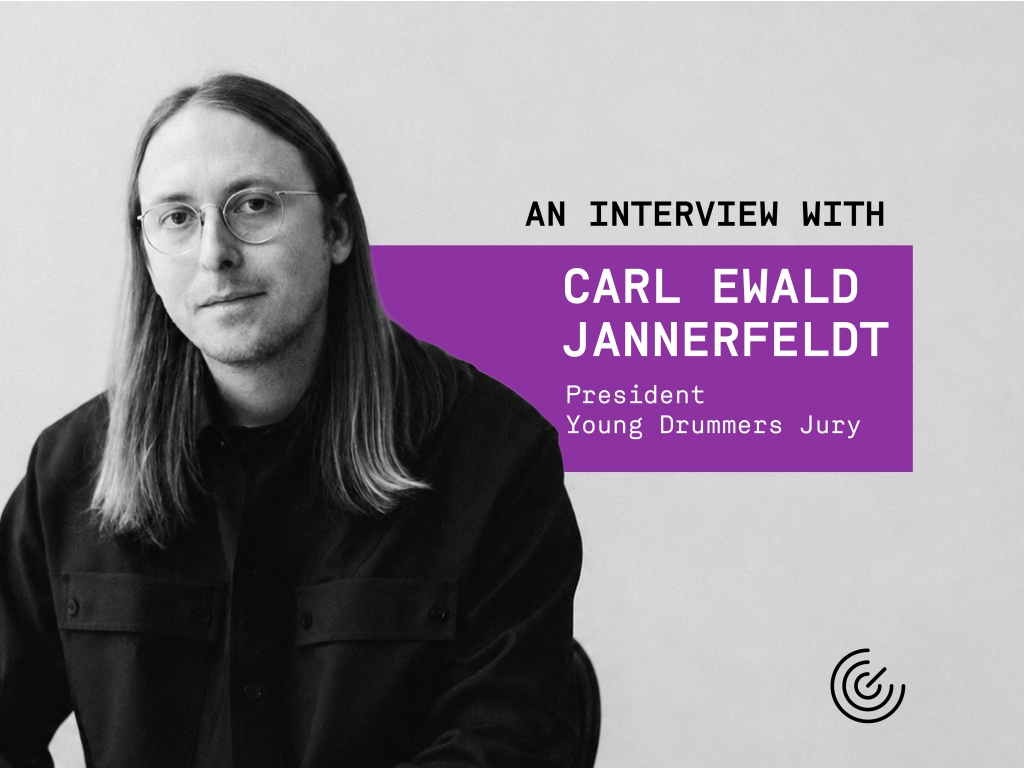
In a world where almost anyone can create almost anything, technical ability alone is no longer enough to stand out. For Carl Ewald Jannerfeldt, Creative Director and founder of Rocket—Science, President of this year’s Young Drummers Competition Jury and one of the speakers at Golden Drum 2026, what matters now is having the nerve to be different – and the judgement to know when an idea is worth pursuing.
Ahead of the festival, he reflects on what creative bravery looks like in 2026, why the best ideas make us wish we had thought of them first, and how young creatives can develop the taste, confidence and persistence needed to make their mark in an industry being rapidly reshaped by AI.
Many young creatives are entering the industry at a time when AI is transforming the creative process. How do you think this generation’s career paths will differ from those of previous generations?
I spent my early years on unglamorous production work nobody misses — which, it turns out, was where judgment came from. This generation will skip most of it. AI has removed the boring parts, but the boring parts were also the practice — thousands of small, tedious attempts that quietly teach you what good looks like. Their paths will be faster and less linear, more like directors, or founders, from day one. The winners will find their own way to put in that practice and build taste. I still think taste and judgment is the one thing you can’t prompt for.
When reviewing Young Drummers submissions, what separates a good idea from one that makes you genuinely excited?
A good idea answers the brief. A great idea makes the jury slightly annoyed they didn’t think of it first — jealousy is the most reliable scoring system ever invented. The practical test: does someone reach for their phone to show a person who isn’t in the room? Great ideas get forwarded, and often feel a little bit illegal — like someone found an undiscovered loophole.
What is the biggest mistake creatives make when trying to create award-worthy work?
Making it for juries instead of people. You can always tell — the work starts as a case film and the idea gets reverse-engineered to fit it. My rule: if the idea only makes sense after two minutes of melancholy piano music, it isn’t an idea, it’s an alibi. Focus on the real world — juries are people who’ve seen too much advertising; impress them with something that clearly wasn’t made for them.
The industry often talks about innovation, but many breakthrough ideas are surprisingly simple. What role does simplicity play in great creative work?
Complexity is easy — anyone can keep adding to make up for a weak foundation. Simplicity takes restraint and conviction, and those are hard things. To get there you need to find the one thing worth saying, then have the nerve to say only that. No Creative Director has ever said: “I love it, let’s add some stuff.”
What would you like every Young Drummer participant to take away from this year’s competition?
That bravery is a habit, not a personality. Nobody is born fearless — you need to practice going slightly too far until it stops feeling dangerous. I want every participant to cross the line at least once; that’s how you find out where it actually is. And to know what it feels like to put their name on something real.
You’ve been named the world’s most awarded copywriter by The Big Won. Looking back, what is one lesson you wish you had learned earlier in your career?
That the award is the last thing you win. An idea has to win meeting after meeting after meeting, in rooms where someone is always ready to make it smaller — or kill it. The best creatives I’ve worked with weren’t just better makers — they were better defenders and convincers. Ideas don’t need to survive award shows. They need to survive a Tuesday, in a conference room, where a committee is trying to kill them — usually politely.
Throughout your career, you’ve created work that has won awards, earned global media attention, and delivered impact for brands. Which achievement are you most proud of, and what did it teach you about the true purpose of creativity?
Pretty big question — let me split it in two. Achievement-wise, as in award-wise, I have to go with the first one I ever won: a Young Creatives competition in Sweden that got me and my friend Sandra sent to Cannes. It mattered because it showed me that I had some kind of ability to be creative, and creativity does to some degree run on confidence, or at least belief.
As for the true purpose of creativity — I’m gonna pass on that one ;)
Secure your delegate pass and be part of the ideas, conversations and creative energy of Golden Drum 2026.