We Need to Theorise Less and Make More
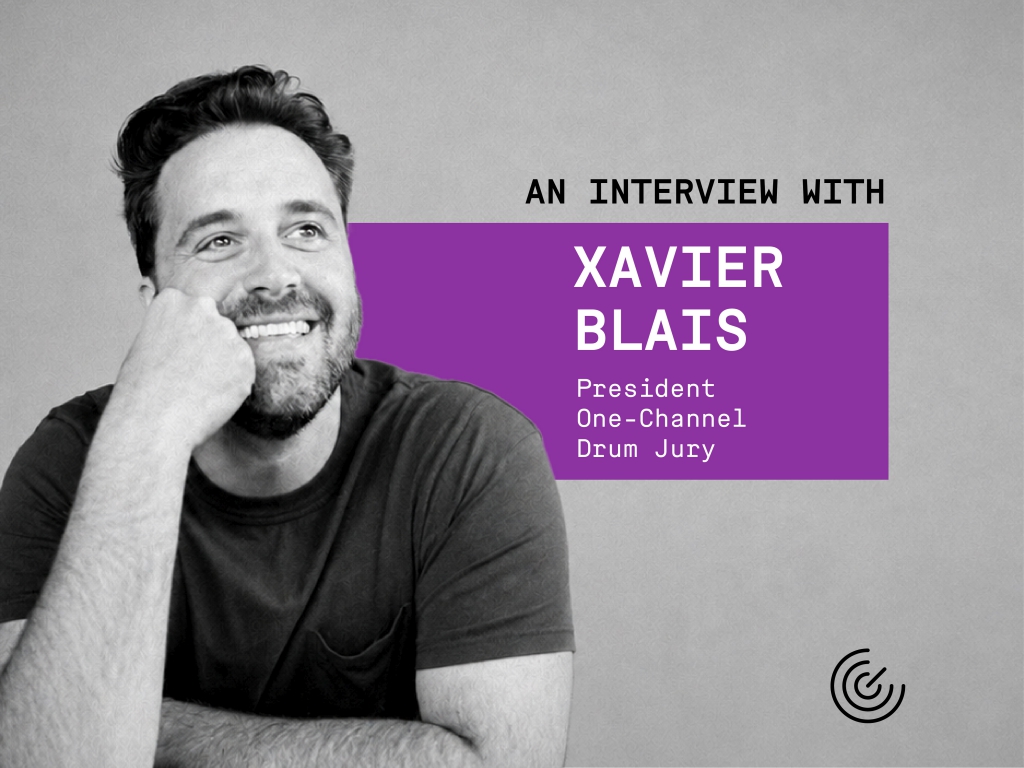
In a time where brands are constantly pushed to be everywhere, more channels do not necessarily mean greater impact. Sometimes, the strongest ideas are the simplest ones – rooted in truth, distinctive enough to be remembered and brave enough to cut through the noise. As President of the One-Channel Drum Jury and one of the featured speakers at Golden Drum 2026, Xavier Blais, Partner and Chief Creative Officer at Rethink, shares his perspective on what makes creativity stand out, why making still matters in the age of AI, and what it takes to consistently create work people genuinely want to notice.
Rethink has built a reputation for creating highly distinctive work. What is the most important ingredient for developing ideas that people genuinely remember?
Truth. Most advertising feels over-engineered and like it's talking at people rather than to them. The work people remember doesn't feel like advertising, even though technically it is.
The other part is finding a shared truth between the brand and people, then expressing it through something distinctive to the brand. With Coors Light, for example, we took a real cultural moment, a foul ball destroying a Coors Light ad featuring Shohei Ohtani, and turned it into something only that brand could do. It was true, timely and recognizable, but still felt new.
Looking back at your career, is there a campaign or project that fundamentally changed the way you think about creativity?
Ketchup and Seemingly Ranch changed how I think about reacting to culture. It wasn't just about jumping on a cultural moment; it was about finding a way to turn something that hadn't been commercially successful into something people wanted.
What really stuck with me was what happened afterward. Walmart had stopped listing the product, then called asking for two pallets. That's the kind of creative response I find exciting: culturally relevant, simple and capable of actually changing the business.
With audiences facing constant content overload, is it becoming harder to capture attention, or are brands simply approaching it the wrong way?
I think brands are often approaching it the wrong way. We're overloaded with content, so the work that cuts through tends to feel spontaneous, strange or genuinely fresh. Nutter Butter's social presence is a good example – it feels more like a fever dream than a traditional brand account.
We used to talk about “respecting the feed,” and I still believe in that. Don't over-manufacture everything. Respect people's intelligence and time. If brands try too hard to be polished, hit every message and launch everything on schedule, they can end up creating more noise instead of something people actually want to notice.
Artificial intelligence is transforming the creative process. How do you think it will influence the way ideas are developed over the next few years?
I think we're going to see a lot more garbage before we see better work. AI has given people enormous means of production without necessarily giving them better judgment. That's why I like the term “AI slop”; people are going to become more sensitive to what looks generic or artificial. I'm optimistic that audiences will develop fatigue with it and start filtering it out.
My bigger concern is that we start theorizing ideas instead of making them. AI makes it incredibly easy to imagine something, put it in a deck and feel like you've done the work. Creativity still needs tangibility. I hope we don't lose the value of making something real, even if the tools change.
In your experience, is great creativity today more dependent on exceptional individual talent, or on building the right environment and systems that allow people to consistently produce great work?
I think hunger and a strong point of view matter more than raw talent. Hungry, inventive people with different perspectives feed off each other and create the conditions for great work. And that applies beyond the creative. I've worked with account people and strategists who were just as passionate and creatively driven as the creatives.
So I don't think creativity is about one brilliant individual. Individuals become the system. You need the right people, a shared language and an environment that keeps pushing everyone forward.
What do creative leaders underestimate most when it comes to getting the best out of people—direction, protection from pressure, or giving them enough space to fail?
Safety. Creative people need to feel safe enough to say something stupid.
The best ideas often start as jokes or half-formed thoughts, so people need to know they can put those ideas on the table without being judged. That doesn't mean removing standards; it means creating enough psychological safety to experiment.
Sometimes that starts with the creative director saying something dumb first. It gives everyone else permission to do the same.
Rethink has produced a series of highly visible, award-winning campaigns—what do you think is harder today: creating one breakthrough idea or building a system that repeatedly delivers commercially successful creativity at scale?
Definitely the latter. An agency isn't its name or its logo; it's its people. To repeat success, you need to give those people a shared standard and the tools to reach it consistently.
That's why we use CRAFTS as a creative framework: Clear, Relevant, Achievable, Fresh, True and Shareable. It gives everyone a common language for evaluating ideas, no matter the individual’s background.
The hardest thing in this business is creative consistency. If people across different markets and disciplines can use the same framework to challenge an idea, you reduce subjectivity and make it easier to keep getting better.
Get your delegate pass and experience the ideas, people and conversations defining creativity today.
Young Creatives! There is still time to read the brief and submit your entries to the Young Drummers Competition. The deadline is 21 September.