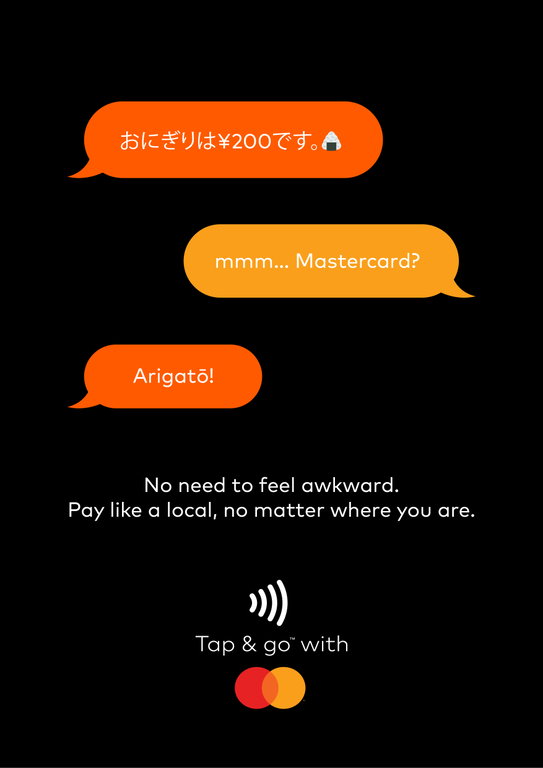
mmm...Mastercard?
Creative idea
Traveling abroad has never been easier. At the same time, it brings unfamiliar languages, currencies and social norms. For young people, these differences can make everything feel intimidating. More importantly, when we’re abroad, we want to blend in with the locals and feel like we belong, yet even small everyday interactions can instantly remind us that we’re outsiders. I wanted to encourage people to be themselves, no matter the time zone. However, things can get really awkward when the old lady from the souvenir shop gives you a strange look. And even more so when she doesn’t flinch while you speak English. We’ve all been there, one way or another. So I built my idea around showing that Mastercard helps you skip the awkward moments of looking like a tourist. And what better way than keeping it short and simple? Tapping is a universal language, and it’s just as easy as saying Mastercard. The magic word that saves every twisted tongue. From Berlin clubs to local Japanese restaurants and even the coast of Rio de Janeiro, Mastercard has you covered. Because when you’re exploring somewhere new, the last thing you need is to overthink. One tap lets you get on with the experience stress-free. No need to feel awkward. Pay like a local, no matter where you are. To bring this idea to life, I created three print conversations designed to grab attention through the very thing that makes you feel like an outsider: a language you don’t understand. Because who would expect to see Japanese written on an ad in Slovenia? To make the execution even more relatable to Gen Z, I made the conversations look like DMs, the format they’re most familiar with in their everyday lives. What starts as an unexpected message in a foreign language ends with a simple, universal tap. (Translation of the prints: Japanese: “An onigiri (rice ball) costs 200 yen.” German: “Do you want to go to the club? The entry costs 20€.” Brazilian Portuguese: “Want to surf? It’s going to cost 100 reals, bro!”)
Agency: Publicis Romania
Authors: Ștefan Postelnicu