AI Has Raised the Floor. The Human Edge Is the Ceiling.
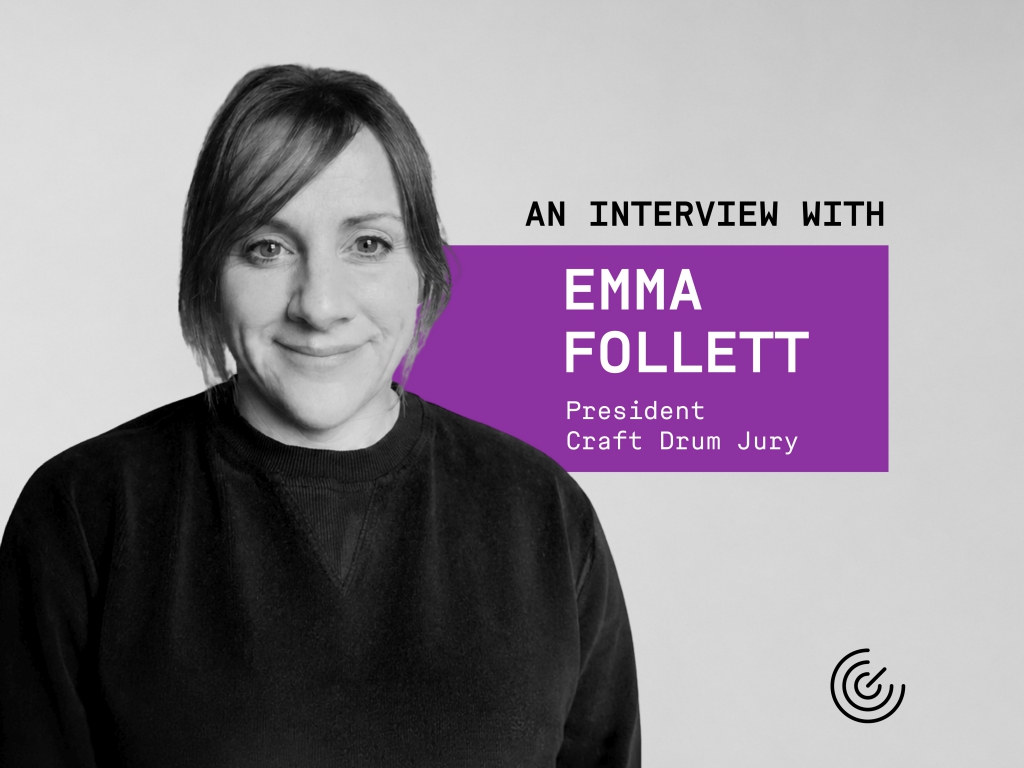
In a world where technology can make almost anything faster, craft remains what makes an idea distinctive, memorable and deeply human. As President of the Craft Drum Jury and one of the speakers at Golden Drum 2026, Emma Follett, Co-Chief Creative Officer at Design Bridge and Partners, reflects on why attention to detail still matters, how AI is redefining the value of human creativity, and why the industry must continue to protect the people and skills that turn great ideas into exceptional work.
You have said that "without craft, everything falls short." In an industry obsessed with big ideas, why is craft still so important today?
I believe that craft is incredibly important because it is the realisation of the big idea and it reflects the values of the brand and the perception and value you associate with a brand. The push to realise a great idea through execution is incredibly important otherwise the Big Idea may just fall short. To see it, feel it and remember it you need to craft it.
Two great examples… the recent Apple TV brand identity redesign. They could have brought that idea to life in a very different way using all of the best technology available today, but instead they chose to create it in physical form, light it beautifully, film it in motion and allow the viewer to feel that magic through the screen…
Another great example is what Jonathon Anderson is doing at Dior. A colleague recommended a film where he talks about the importance of attention to detail in everything that a brand does, because every moment of interaction with a brand embeds in a consumer's mind the values you as a brand want them to feel. There are so many moments of interaction and the craft, love and care you put into them is so important. He describes the handle of the door to the store, which to him is as important as the craft of the beautiful handbags that Dior makes. It should be as lovingly created as the handbag they might choose when they walk out the door.
Throughout your career, you've helped shape some of the world's most recognisable brands. Is there a project that fundamentally changed the way you think about creativity or craft?
There are more than a few that Design Bridge and Partners has been a part of which I think have been instrumental in the way that I see craft and its importance for brands. But one to mention is Guinness, a piece of work that I did not work on but one that I feel incredibly proud of for Design Bridge and Partners.
Guinness is a brand with such a phenomenal heritage. Through the redesign of such an iconic brand we were able to weave in the history and storytelling of the Brand into the identity which was incredibly special. Crafting the Guinness word mark, using a real harp to determine its form and feel and function to inform the graphic execution of the harp in the identity, but also then translating that to the physical form through glassware and founts… Craft became more than about attention to detail; it was about making sure that the spirit of the brand lives through every expression, through identity, photography, physical form… As Arthur Guinness did in 1759 when he signed a very very long lease, this is about making sure that the craft in the identity can also stand the test of time.
Design Bridge and Partners is known for creating distinctive brand identities. What do the world's strongest brands have in common when it comes to craft and design?
The strongest brands know what they stand for and they find a way to express that in a way that truly stands out. Understanding what’s meaningful and making sure that it is truly memorable. We make sure that the brands we partner with find a way to express themselves in a way that is truly distinctive for them and then we make sure that you feel that in every moment of interaction. The strongest brands will also be exceptionally crafted ones.
With AI making it easier to create content at scale, how do you think the definition of craft is changing?
Everyone has AI. Which of course makes it very easy to create content at scale. Not everyone has taste, judgment, and a genuine point of view. Being able to really bring that to life is the only edge left. The competitive edge we have is no longer the access to the tools but what we bring to them. As the baseline will move executions closer and closer together, AI has raised the floor. The human edge — the thinking, the feeling, the making — is the ceiling. That's where all the value lives.
Looking at today's industry, where do you feel the highest standards of craft are emerging—branding, advertising, digital experiences, packaging, or somewhere else entirely?
I think what’s incredibly exciting is seeing the strength of 360 brand experiences. Seeing brands express themselves with clarity, consistency, but in their own unique way across every touchpoint and moment they connect with consumers. For me this is the highest standard of craft, the ability to do this and cut through.
If you could challenge the industry to improve one aspect of its craft standards over the next five years, what would it be?
For me it would be to hold on dearly to craftsmen and women. And by that, I mean each and every one of those people who can create something from scratch in a way that is truly unique. As AI delivers speed and efficiency and the freedom to realise ideas, uncover and use data to greater effect, we must not forget the importance of those that make us feel. The illustrator that allows a brand to speak to us through colour, texture, shape… the film maker that draws us in to see a brand through new eyes, the copywriter that can make words come together in a way that makes you feel a genuine connection, words that can make you laugh or cry, to reappraise or question, a never ending conversation with the brand…
So many crafts are dying, the ‘hand-made’ will go out of business! We must hold onto it dearly and the value that it brings, we must celebrate it, recognise its importance and demand that it thrives! It is our collective responsibility.
Got work worth talking about? Put it in the conversation. Enter your best eligible work into the Golden Drum Competition. Entries close today at midnight, 8 September 2026.
Secure your delegate pass to experience the ideas and people shaping what comes next.